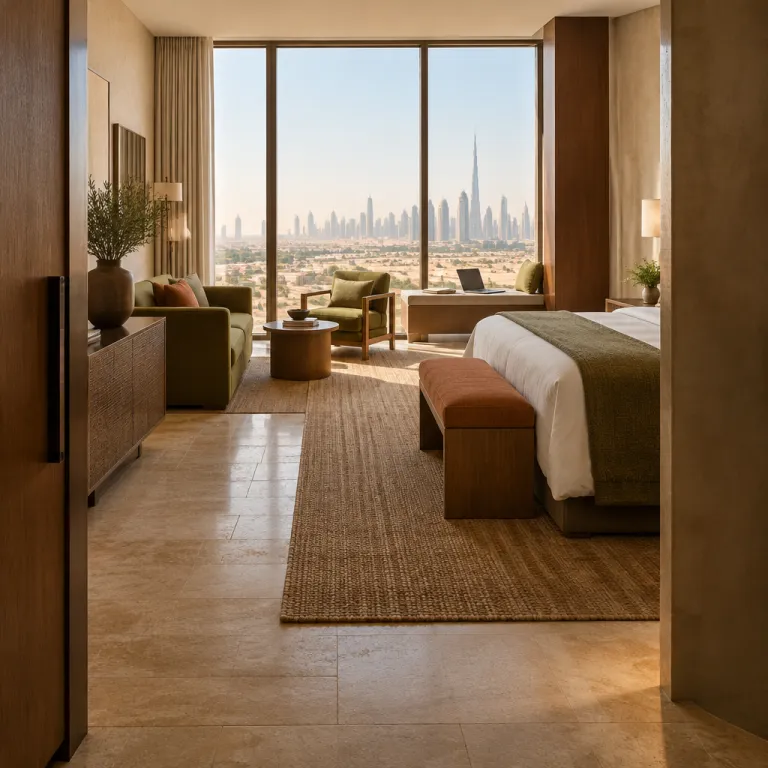
Why winter in the UAE now means a workation season
When the European calendar turns grey, the United Arab Emirates quietly becomes a winter office with a sea view. Remote workers, founders and senior executives now treat winter workations in the UAE as a deliberate lifestyle upgrade, not a guilty pleasure add on. The pattern is clear in the data: according to internal booking analysis from Rotana Hotels & Resorts, a major Gulf based hotel operator, covering November–March 2023/24 (sample size: 42,000 room nights across Dubai and Abu Dhabi), average winter nightly rates rose by 12 %, while reservations linked to UAE registered contacts reached 35 % of the portfolio, up from 27 % the previous season.
This shift is reshaping how luxury hotels across Dubai, Abu Dhabi and the wider emirates think about guest engagement and hospitality. Properties that once focused on three night stays now design for extended stay guests who want a stable base, reliable accommodation and a rhythm that feels closer to home than to a traditional resort break. The trend is strongest in the main Middle East hubs, with Dubai United Arab Emirates and Abu Dhabi United Arab Emirates leading, but secondary destinations such as Umm Al Quwain and Ras Al Khaimah are quietly building their own loyal following of repeat winter guests.
For this audience, the right hotel is less about the tallest tower and more about whether the desk, chair and lighting make a ten hour workday bearable. A workation is defined simply but precisely in the expert material as follows: “What defines a workcation? Stay combining remote work + leisure in same location, often at hotels.” That clarity helps both guests and hotel operators align expectations around stays, from the first search on a booking platform to the final invoice after several nights in the same suite.
Executives arriving via Dubai International Airport or Abu Dhabi International Airport are no longer satisfied with a generic city hotel that treats them as transient. They want a hotel located within minutes of the Dubai Metro or a short drive from Media City, with meeting ready hotel suites and access to co working style lounges that feel curated rather than improvised. In parallel, a growing group of digital nomads uses remote work visas to base themselves in the Arab Emirates for an entire cool season, moving between hotel apartments in Dubai Marina, a desert resort near Abu Dhabi and a palm fringed resort in Umm Al Quwain.
For them, winter friendly workation hotels in the UAE are not a marketing slogan but a practical framework for living. They compare the cost of a month in a one bedroom suite against serviced apartments, factor in laundry, housekeeping and gym access, then decide whether the premium is justified by the hospitality and flexibility. As one official answer in the dataset notes without embellishment: “Do remote workers get visas in UAE? Yes — special remote working or freelance visas available.”
What a hotel must get right for a multi week executive stay
For a workation to succeed, the basics of the hotel must feel invisible and flawless. That starts with connectivity, because no amount of sea view or skyline view compensates for unstable WiFi during a board call or investor pitch. Long stay guests quietly benchmark hotels on upload speeds, router stability and how quickly the team responds when the data connection falters.
Next comes the workspace itself, which separates serious remote work hotels in the UAE from pretty but impractical properties. A proper desk, ergonomic chair and layered lighting matter more than marble finishes, especially for executives who spend eight hours on video calls before heading out into the city. In Dubai Media City, for example, several hotel suites now include dual monitors, printer access and small meeting tables, turning what used to be a leisure focused room into a functional office with a private bedroom attached.
Soft infrastructure is just as critical, and this is where the best hotels in the Arab Emirates quietly outperform serviced apartments. Laundry that returns pressed shirts within hours, room service that understands a working lunch at the laptop, and housekeeping that respects call schedules all contribute to a sense of calm. Award winning guest engagement platforms help some properties anticipate patterns, from preferred breakfast times to the number of coffee capsules needed for an extended stay week.
Kitchen access is another dividing line between a standard hotel and a true long stay base. Many executives now choose hotel apartments in Dubai Marina or Abu Dhabi over classic rooms, valuing the ability to cook a simple dinner after late meetings. When a month in a one bedroom suite with a compact kitchen competes on price with independent apartments, the added hospitality, security and on site facilities often tilt the decision toward the hotel.
Community completes the picture, because even the most driven executive needs a social circuit that does not revolve around the minibar. Properties that succeed with winter workation guests curate low key events, from rooftop yoga to small networking evenings, rather than loud theme nights. As one Dubai based general manager of a five star business hotel notes, “Our long stay winter guests are not looking for a party; they want a place where they can finish a pitch deck at 6 pm and still find a quiet, human conversation by 8.” Families who have already learned how to use indoor facilities creatively during the hotter months, as explored in guides to why the smartest families book UAE hotels in July for indoor worlds, often return in winter for a calmer, work focused version of the same infrastructure.
Choosing between city suites, serviced apartments and resorts
Once the decision to winter in the UAE is made, the real question becomes where to base yourself. A central city hotel in Dubai or Abu Dhabi offers immediacy, with meetings, restaurants and airports within easy reach, but the trade off is often less space for the price. Serviced apartments and branded residences, by contrast, stretch the square metres and can make a month long stay feel more residential than transient.
In Dubai, the spectrum runs from hotel apartments in Dubai Marina with direct access to the tram, to high floor hotel suites on Sheikh Zayed Road that prioritise skyline view over balcony space. Palm Jumeirah adds another layer, with resort style properties that now publish transparent extended stay rates for executives who want beach access without sacrificing a proper desk. Atlantis The Royal, for example, leans into its resort identity but still understands that a certain slice of its winter guests will spend long mornings on email before drifting down to the pool.
Abu Dhabi offers a different rhythm, especially for those who split their time between the financial district and cultural projects on Saadiyat Island. A desert resort outside the city can work for founders who want isolation between investor meetings, but most executives prefer to anchor themselves in the city and treat the dunes as a weekend escape. Our own guide to where to stay around the future Guggenheim on Saadiyat, which focuses on booking around the Guggenheim before the museum opens, highlights how a well located hotel can double as both office and cultural base.
For many, the most rational approach is a hybrid month that starts in a city hotel for back to back meetings, then shifts to a quieter resort once the calendar eases. That is where flexible workation packages in the UAE really show their value, because adaptable contracts allow guests to move between sister properties without renegotiating every detail. As we have argued in our analysis of how the UAE’s real high season starts when October cools the desert, the smartest travellers treat the country as a network of complementary stays rather than a single stop.
Price comparisons should be done with a spreadsheet, not a hunch, especially for stays of three weeks or more. When you factor in utilities, cleaning, gym membership and co working fees, a month in a well run hotel can rival or even undercut independent apartments in the same city. The key is to request a clear list of inclusions, from laundry quotas to meeting room hours, before committing to an extended stay contract.
| Option | Typical winter monthly rate* | Best for |
|---|---|---|
| City hotel suite | AED 14,000–18,000 | Shorter, meeting heavy stays |
| Hotel apartment | AED 12,000–22,000 | One month+ with kitchen access |
| Resort stay | AED 16,000–22,000 | Hybrid work + leisure focus |
*As a rough benchmark, winter monthly rates for a one bedroom hotel apartment in Dubai Marina or on Abu Dhabi’s Corniche often fall between AED 12,000 and AED 22,000, depending on brand, view and included services.
Designing a sustainable work life rhythm across the emirates
Even the most luxurious suite will fail as a winter office if you burn out by week two. The executives who return year after year to UAE winter workations treat their stay as a season, not a sprint, with clear boundaries between laptop time and leisure. They use the city as a toolkit, not a distraction, choosing when to plug into its energy and when to retreat.
In Dubai, that might mean structuring days around early morning deep work before the city heats up, then scheduling external meetings in clusters to minimise travel time. Being located within fifteen minutes of the Dubai Metro or a short taxi ride from key business districts such as Media City and DIFC reduces friction and keeps the focus on work rather than logistics. Evenings can then be reserved for the marina promenade, a quiet dinner on Palm Jumeirah or a simple walk along the canal, rather than another networking event.
Abu Dhabi lends itself to a slightly slower cadence, with many executives choosing hotel apartments near the Corniche for weekday practicality and then escaping to a desert resort or Saadiyat beach property on weekends. Short drives between emirates make it realistic to base yourself in one city and still sample others, from a cultural day on Saadiyat to a low key seafood lunch in Umm Al Quwain. The point is not to tick off a list of best attractions, but to build a personal circuit that keeps you energised across multiple winter stays.
For those who rely heavily on meetings with partners across the Middle East, the UAE’s aviation network is another quiet advantage. Being based in a hotel within easy reach of Dubai International or Abu Dhabi’s airport turns regional day trips into manageable excursions rather than exhausting marathons. When your accommodation, transport and workspace all align, the line between business and leisure blurs in a way that feels sustainable rather than chaotic.
Ultimately, the most successful winter workations in the Arab Emirates are those where the hotel feels like a well run private club, not a theme park. Staff remember your coffee order, the gym becomes part of your daily routine, and the front desk team understands that a late checkout after an extended stay month is not a luxury but a gesture of respect. In that context, long stay workation hotels in the UAE stop being a trend and become a quiet, repeatable strategy for living well while working hard.
FAQ
What defines a workation in the UAE context ?
A workation in the UAE means combining remote work and leisure in the same location, usually in a hotel or serviced apartment, for at least several nights. Guests maintain their regular workload while using the country’s climate, infrastructure and hospitality to improve daily quality of life. Many choose extended stay arrangements that last from two weeks to several months during the cooler season.
Who is actually booking workation hotels in the UAE for winter ?
The core audience includes remote workers, founders and senior executives who can work from anywhere but need reliable connectivity and professional facilities. Some extend existing business trips in Dubai or Abu Dhabi, turning a three day meeting schedule into a three week stay. Others relocate entirely for the season under remote work or freelance visas, moving between city hotels, hotel apartments and resorts across the emirates.
Typical profiles include European managers escaping dark winters, Gulf based consultants who prefer to centralise meetings in Dubai United Arab Emirates, and tech founders who split their time between Abu Dhabi United Arab Emirates and other regional hubs.
How do long stay hotel rates compare with serviced apartments ?
For stays of a month or more, serviced apartments can appear cheaper on nightly rates, but the comparison changes once you add utilities, cleaning, gym access and co working fees. Many hotels in Dubai United Arab Emirates and Abu Dhabi United Arab Emirates now offer extended stay packages that bundle these services into a single rate. Executives often find that the extra hospitality, security and flexibility justify a modest premium over independent apartments.
Is the UAE suitable for families combining work and school during winter ?
Yes, many workation hotels in the UAE for a long stay in winter are designed to accommodate families, with separate sleeping areas, kitchenettes and access to international schools or online learning hubs. Parents work from in room desks or co working lounges while children follow remote curricula, then everyone uses pools, indoor play areas and cultural attractions after hours. The same indoor infrastructure that makes UAE hotels attractive in summer also supports comfortable family routines in winter.
Do I need a special visa to work remotely from a UAE hotel ?
Remote professionals who are employed by companies outside the UAE can often apply for dedicated remote work or freelance visas, subject to income and documentation requirements. These visas allow you to reside in the Arab Emirates while continuing to work for foreign employers, making long stay hotel arrangements legally straightforward. Travellers on standard tourist visas should always check current regulations and avoid conducting any local employment without the appropriate permit.