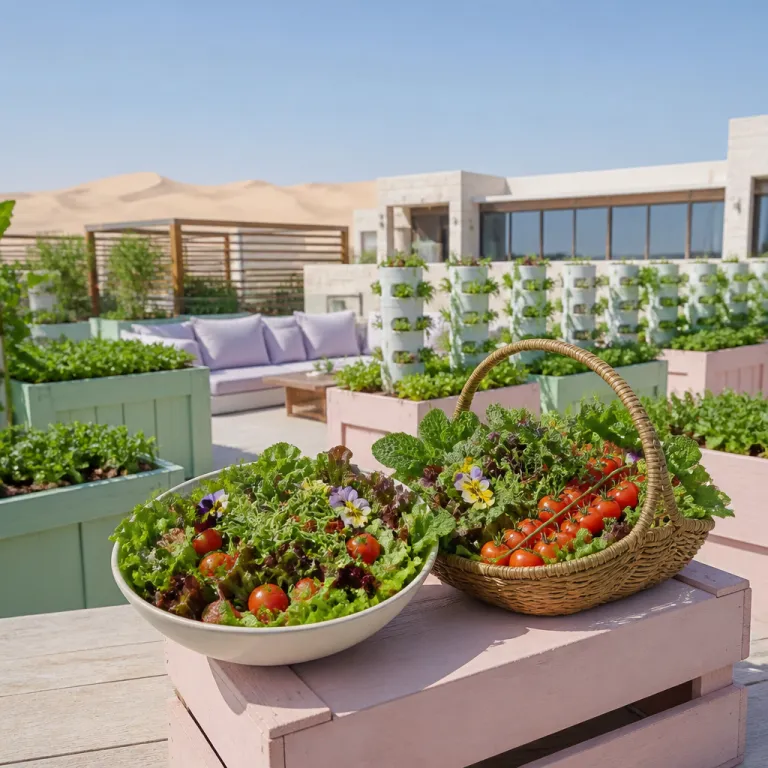
Why farm to table hotels in the UAE desert matter now
In the United Arab Emirates, farm to table hotels UAE sustainable dining is no longer a niche talking point. Luxury hotels across the arab emirates are quietly turning rooftops, courtyards and spare plots of land into working farm spaces that feed their own restaurants. For a solo explorer planning travel through dubai united and the wider united arab emirates, this shift changes not only how dinner tastes but what that dinner means.
Most food served in UAE hotels has historically travelled thousands of kilometres from india, the united kingdom, east africa or saudi arabia before reaching your table. When a hotel now grows farm fresh herbs, leafy greens and edible flowers on site, it cuts those food miles dramatically and reframes sustainability as something you can actually taste. Chefs talk about sustainability as an expectation rather than a trend, and guests increasingly ask how their dining choices support local food systems in the uae rather than distant suppliers across the arabian gulf.
For premium hotels, this is also a sharp positioning play in a crowded dubai market of headline grabbing restaurants and every possible style of dining room. Properties that invest in hydroponic farm technology, vertical systems and organic soil based plots can credibly market themselves as farm to table hotels where sustainable dining is built into the daily menu, not just a marketing line. When you sit down at a table dining venue and the server points to the salad leaves grown ten metres away, the commitment to sustainability feels concrete rather than abstract.
Inside the hotel farms: hydroponics, desert agriculture and real food miles
Several leading hotels in the united arab emirates now operate serious on site farm projects rather than ornamental herb beds. Coral Beach Resort in Sharjah runs an organic farm that supplies fresh ingredients to its main restaurant, while Ramada Hotel & Suites Ajman harvests fresh produce from an urban farm that has become central to its food strategy. On Saadiyat Island, Jumeirah at Saadiyat Island Resort has installed an advanced hydroponic farm that shows how farm to table hotels UAE sustainable dining can work even on a sandy shoreline facing the arabian gulf.
Hydroponic systems allow these hotels to grow lettuce, kale, cherry tomatoes and edible flowers without soil, using nutrient rich water and tightly controlled light. Business Traveller has reported that such hydroponic technology can reduce water use by up to 90 percent compared with conventional agriculture, a crucial advantage in the uae desert where every litre counts. When you tour these farms between pool sessions and beach walks, you see how sustainability, food security and guest experience intersect in a way that feels both technical and surprisingly poetic.
In dubai, Canopy by Hilton Dubai Al Seef has launched the Skafos Hydroponic Farm, while Ritz Carlton JBR has created a vertical hydroponic farm that climbs towards the sky above the bay. Conrad Abu Dhabi Etihad Towers has gone further with a zero waste hydroponic farm that feeds several restaurants inside the hotel, aligning its commitment to sustainability with the broader national food security strategy. For travellers interested in regenerative travel in the emirates, these properties now sit alongside desert conservation lodges as serious contenders for the most eco friendly stays, a theme explored in depth in our guide to regenerative travel in the Emirates.
From farm to table: how menus, seasons and storytelling are changing
Once a hotel has its own farm, the real test comes on the plate and at the table. Farm to table hotels UAE sustainable dining only feels authentic when the restaurant menu changes with what the hydroponic racks and organic beds are actually producing. In a country without dramatic four season shifts, chefs instead talk about micro seasons of heat, humidity and cooler months, building table contents around what grows best in each window.
Leafy greens, herbs and delicate edible flowers thrive in the cooler months, while tougher varieties and some tomatoes can handle the warmer shoulder periods. Chefs at these hotels design both casual restaurants and fine dining rooms around locally sourced produce, then supplement with imports from india, east africa or the united kingdom when necessary. The narrative is not about purism but about reducing dependence on long haul supply chains and using fresh ingredients from the hotel farm wherever possible.
Communication matters as much as cultivation, especially for guests who care about eco friendly choices but still expect the best. Many properties now print the name of their farm, the distance from farm to table and the percentage of farm fresh produce used directly on the menu, sometimes alongside icons that highlight low carbon dishes. This transparency dovetails with broader efforts to cut emissions from luxury stays, a topic we examine in our report on carbon neutral check ins and decarbonizing the luxury stay, where food related emissions play a surprisingly large role.
Guest experiences: from farm tours to harvest dinners in dubai and beyond
For the solo explorer, the most memorable moments often happen far from the lobby chandelier. At farm to table hotels UAE sustainable dining properties, that might mean walking through a cool hydroponic corridor in dubai while a chef snips basil for your lunch, or joining a small group for a sunset harvest at a coastal resort near dibba bay. These experiences turn abstract sustainability into something tactile and quietly luxurious.
Some hotels now offer scheduled farm tours where guests can see how vertical structures, LED lighting and nutrient solutions work together to produce farm fresh greens in the middle of the desert. Cooking classes often follow, with chefs guiding you through simple dishes that showcase locally sourced herbs, tomatoes and edible flowers, sometimes paired with seafood from the nearby arabian gulf or oysters from Dibba Bay farms. The result is a deeper understanding of how local food systems in the uae are evolving, and why these hotels invest so heavily in on site agriculture.
Dining events build on this momentum, from chef’s table dinners in the farm itself to terrace evenings where each course highlights a different section of the hotel’s agricultural project. Guests might start with a salad of anne fresh leaves and mary anne style herb blends, move to grilled vegetables that show off the best of the current micro season, then finish with a dessert scented by farm grown mint. For residents planning staycations, our guide to where UAE locals book summer hotel stays highlights which hotels turn these farm table experiences into genuine reasons to check in when the city quiets down.
Authenticity, economics and how to book the right sustainable stay
Not every hotel that talks about farm to table hotels UAE sustainable dining is doing the same work behind the scenes. Some operate substantial farms that meaningfully shift procurement towards locally sourced produce, while others rely on a few herb pots and a strong marketing team. As a traveller, the task is to separate genuine commitment to sustainability from greenwashing without turning every dinner into an audit.
One practical approach is to ask specific questions before you book, focusing on how much of the restaurant’s fresh produce comes from the on site farm and how often the menu changes. Hotels that take their commitment to sustainability seriously will usually share clear figures, sometimes noting that hydroponic systems can save up to 90 percent of water compared with traditional farming methods. You can also look for partnerships with local farmers, suppliers such as Dibba Bay for seafood, or regional distributors that work with hundreds of small farms, which signals a broader engagement with the uae food ecosystem.
Economically, locally grown food in the desert is not always cheaper than imports from india, east africa or the united kingdom, especially when you factor in the capital cost of hydroponic equipment. Yet many hotels absorb part of that cost because the marketing value, guest satisfaction and alignment with national food security goals justify the investment. When you pay a premium for a tasting menu in dubai or an all day restaurant in abu dhabi, you are increasingly paying for a system that keeps more value within the united arab emirates and reduces pressure on fragile global supply chains.
FAQ
Which UAE hotels are actually growing their own food on site ?
Several hotels in the united arab emirates now run serious on site farms, including Coral Beach Resort in Sharjah, Ramada Hotel & Suites Ajman and Jumeirah at Saadiyat Island Resort. In dubai, Canopy by Hilton Dubai Al Seef and Ritz Carlton JBR both operate hydroponic or vertical farm systems that supply their restaurants. Conrad Abu Dhabi Etihad Towers has also introduced a zero waste hydroponic farm that feeds multiple venues inside the hotel.
What is hydroponic farming and why does it suit UAE hotels ?
Hydroponic farming is a method of growing plants without soil, using nutrient rich water and controlled environments to deliver exactly what each crop needs. This approach suits UAE hotels because it dramatically reduces water use, allows year round production despite harsh desert conditions and fits into compact urban spaces such as rooftops or service terraces. For guests, it means more consistent access to farm fresh greens, herbs and edible flowers grown just steps from the dining room.
How can I tell if a hotel’s farm to table claims are genuine ?
Look for specific information about the size of the farm, the percentage of fresh ingredients sourced on site and how often the menu changes to reflect harvests. Genuine farm to table hotels UAE sustainable dining operations usually offer farm tours, highlight locally sourced produce on the menu and can explain how their systems support national food security goals. Vague language about green values without concrete details is often a sign that the farm is more decorative than functional.
Does eating at these hotel restaurants really reduce my environmental impact ?
Dining at hotels that grow a significant portion of their own produce can reduce food miles, cut water use through efficient hydroponic systems and support more resilient local food networks. The impact of one meal is modest, but repeated choices in favour of such restaurants help shift demand towards more sustainable practices across the hospitality sector. When combined with other actions, such as choosing properties that invest in energy efficiency and waste reduction, your stay can meaningfully support lower impact luxury travel.
Are farm to table hotel restaurants more expensive than regular options ?
Menus at these restaurants can be priced slightly higher because of the capital investment in farm infrastructure and the labour required to manage it. However, hotels often offset costs through reduced reliance on imported produce and by using the farm as a key differentiator in a competitive luxury market. For many guests, the added value of fresher flavours, transparent sourcing and a tangible commitment to sustainability justifies the premium.