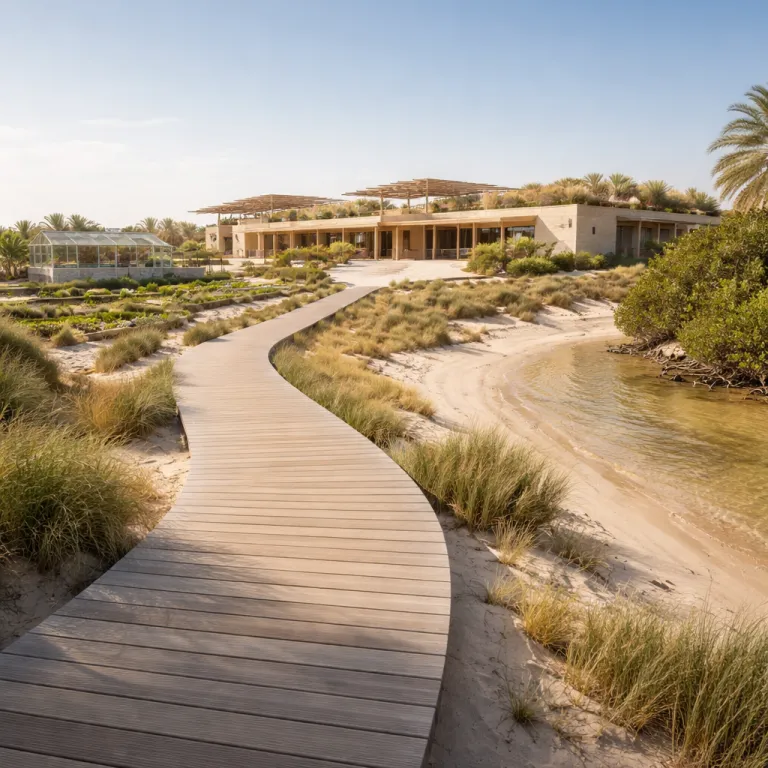
From sustainable to regenerative: how travel uae is changing luxury city escapes
Regenerative travel in the United Arab Emirates means your stay leaves a net positive impact, not just a lighter footprint. In a country often defined by rapid construction and spectacle, the most interesting luxury properties now treat every day of your visit as a chance to restore ecosystems, support local communities and protect culture across the emirates. For the solo explorer planning to travel through the United Arab Emirates, this shift turns a simple hotel booking into a deliberate choice about what kind of country you want to help shape.
Across Dubai and Abu Dhabi, the conversation has moved beyond whether a city hotel recycles or reduces plastic. The most forward-thinking addresses in each city now work with conservation partners in the surrounding desert, fund mangrove planting along the Persian Gulf coastline and design guest experiences that channel money into local artisans rather than anonymous supply chains. When you travel UAE as a single guest, your individual room night may feel small, yet multiplied across 16.73 million tourist arrivals in Dubai in 2023 (Dubai Department of Economy and Tourism, 2024, “Dubai Tourism Performance Report 2023”) it becomes a powerful lever that the UAE Government and responsible hoteliers can use to steer the entire country toward a regenerative model.
Regenerative hospitality goes further than the familiar sustainability checklists promoted by a department of state or a travel advisory from a foreign government. Instead of asking how to do less harm, the best properties in the United Arab Emirates ask how each stay can actively repair damage from past development, including stress on fragile desert habitats and coastal wetlands. For a luxury and premium hotel booking website focused on travel in the UAE, the editorial challenge is to edit out greenwashing and highlight only those city and desert retreats where the impact is measurable, transparent and aligned with the UAE Government’s long-term environmental goals.
Solo travelers arriving at Dubai International Airport or Abu Dhabi International Airport now expect more than a polished lobby and a skyline view. They want to understand how their chosen hotel in Dubai city or Abu Dhabi city works with local NGOs, how much water its desert resort uses per guest and whether its energy mix reflects the country’s clean energy ambitions. When you plan to travel UAE for business during the day and explore the city by night, you should be able to filter properties not only by spa size or suite category, but also by whether they support coral reef restoration in the Persian Gulf or sponsor research in Al Marmoom Desert Conservation Reserve.
There is a geopolitical layer to this shift that serious travelers cannot ignore. Travel State Department briefings from the United States and other countries now routinely address climate risk, water scarcity and the potential for armed conflict over resources in the wider Middle East, alongside traditional safety topics. While the United Arab Emirates remains generally safe and stable, and most embassy or consulate travel advisory notes focus on standard precautions, the smartest hotels quietly align with these broader concerns by investing in resilience projects that protect both guests and local residents over time.
For the solo explorer, this means that a luxury stay in Dubai–Abu Dhabi corridors can double as a masterclass in how a modern Arab city navigates climate, culture and commerce. You might spend one day in a glass-walled suite overlooking Sheikh Zayed Road, then the next day with a tour guide in a protected desert area learning how native flora is being reintroduced. Travel in the United Arab Emirates becomes less about ticking off icons and more about understanding how a young country at the heart of the Middle East is using tourism revenue to future-proof its landscapes and its people.
City escapes that give back: regenerative stays in dubai and abu dhabi
Dubai has long sold itself as a city where anything is possible, yet the most compelling luxury stays now focus on what is repairable. In the context of travel UAE, that means choosing hotels that partner with desert conservation projects, reduce energy use in meaningful ways and design city escapes where you can step out of the lobby and into authentic local neighborhoods. When you plan where to travel in September or during cooler months, a regenerative city stay in the United Arab Emirates can be as restorative for the environment as it is for you.
Take the new generation of wellness-led properties on Dubai’s coastline, where regenerative design principles are finally catching up with the city’s marketing. At Six Senses The Palm, Dubai, for example, solar power, grey water recycling and native landscaping are treated as baseline, while curated experiences connect guests to marine conservation and local food systems rather than generic mall tours. According to the brand’s publicly available sustainability reports, the Six Senses portfolio globally tracks metrics such as energy use per guest night, percentage of grey water reused and funds allocated to conservation and community projects, offering a model for how a highly anticipated wellness opening in Dubai can document its impact in similarly concrete terms.
Abu Dhabi offers a different rhythm for the solo traveler who wants a city escape that still feels connected to the desert. Properties aligned with Al Marmoom Desert Conservation Reserve–style initiatives or similar Abu Dhabi desert reserves often structure their tour programs around low-impact wildlife viewing, stargazing and guided walks that explain how fragile dunes are being protected. When you travel through Abu Dhabi city, look for hotels that run small-group excursions with a trained tour guide rather than mass-market desert tours that treat the landscape as a theme park.
Regenerative city escapes also extend to the mountains and heritage villages that sit within easy reach of Dubai and Abu Dhabi. Hatta, for example, has emerged as an eco-tourism hub where lodges and glamping sites experiment with renewable energy, water-saving technologies and community-led experiences that keep revenue in the local area. If you are mapping out a multi-stop itinerary across the emirates, combining a few days in a regenerative city hotel with a short stay in Hatta or similar mountain villages can turn a standard travel UAE plan into a layered journey through different ecosystems.
For timing, solo travelers should pay close attention to both climate and crowd patterns when planning to travel UAE. Cooler months are ideal for desert and mountain activities, while shoulder seasons can offer better value on premium rooms in both Dubai and Abu Dhabi without sacrificing experience. Curated overviews of where to travel in September for ideal weather can help you align your city escape with the best conditions for outdoor regenerative activities.
Behind the scenes, the UAE Government and Dubai’s Department of Economy and Tourism have been nudging the market toward greener practices through initiatives like the Dubai Sustainable Tourism Stamp, launched in 2021 (Dubai DET, 2021, “Dubai Sustainable Tourism Stamp Programme”). While these programs are not a guarantee of full regenerative impact, they create a baseline that serious properties can then exceed through deeper partnerships with conservation groups and cultural institutions. As a traveler, your role is to read beyond the label, ask specific questions and reward the hotels that treat sustainability certifications as a starting point rather than a marketing end point.
How to read the fine print: separating greenwashing from genuine impact
For a solo explorer booking through a luxury-focused platform like myuaestay.com, the hardest part of travel UAE is not finding a beautiful hotel, but identifying which properties in Dubai or Abu Dhabi are genuinely regenerative. Marketing language has become sophisticated, and almost every city hotel now claims to be sustainable, eco-friendly or community focused in some way. Your task is to move past the headlines and interrogate how each property in the United Arab Emirates translates those claims into measurable action on the ground.
Start with certifications, but do not stop there. International standards such as LEED for building design or EarthCheck for operations can signal that a hotel in Dubai city or Abu Dhabi city has met rigorous environmental criteria, yet they rarely capture the full regenerative picture. You should also look for evidence of partnerships with local conservation organizations, transparent reporting on energy and water use, and guest programs that contribute directly to restoration projects in the desert or along the Persian Gulf coast.
When a hotel highlights its connection to Sheikh Zayed’s environmental legacy or frames itself as aligned with UAE Government sustainability goals, ask for specifics. Does the property support mangrove planting in Abu Dhabi’s coastal reserves, fund coral reef restoration near Dubai or sponsor research into desert flora resilience in collaboration with universities in the Middle East? If the answer is vague, you are likely dealing with greenwashing rather than a truly regenerative model that benefits both the city and the surrounding country.
Solo travelers should also pay attention to how a hotel treats its local workforce and suppliers. Regenerative travel in the United Arab Emirates is as much about social equity as it is about carbon, so look for properties that prioritize Emirati cultural programming, fair wages and long-term partnerships with artisans and small businesses. When you visit a hotel that proudly showcases local design, cuisine and storytelling, your stay supports a living culture rather than a staged performance for tourists from the United States or other distant markets.
Digital transparency is another powerful filter when you travel UAE. A serious hotel will publish clear sustainability reports, outline its goals and progress over time, and welcome third-party audits rather than hiding behind generic statements. On a curated booking site, the editorial team should edit property descriptions to highlight verifiable initiatives and call out where information is missing, helping you make informed choices without needing to cross-check every embassy or consulate advisory or State Gov website.
Finally, remember that regenerative travel is not limited to one country or region, and your standards should travel with you beyond the United Arab Emirates. If you have experienced community-led stays in Latin American heritage cities, for example, you will recognize similar patterns when evaluating where to stay in Cartagena or other destinations that balance tourism with preservation. Independent guides to where to stay in Cartagena for an unforgettable experience can sharpen your eye for authenticity, which you can then apply when comparing luxury hotels across Dubai, Abu Dhabi and the wider Arab Emirates.
The price of doing good: is regenerative luxury the new standard in the uae ?
There is a persistent assumption that regenerative travel in the United Arab Emirates must always cost more, especially in headline cities like Dubai and Abu Dhabi. In reality, the price dynamics are more nuanced, and the premium you pay often reflects design choices, location and service levels rather than sustainability alone. With an average hotel cost around 500 AED per night across the country (Rough Guides, 2023, “How much does a trip to Dubai cost?”), the real question is how much of that rate is being reinvested into environmental restoration and community development rather than pure aesthetics.
At the very top of the market, some desert retreats and coastal sanctuaries do command higher nightly rates, yet they also tend to offer smaller footprints, lower guest density and more immersive programming. When a property limits the number of rooms to protect a fragile desert ecosystem or a sensitive stretch of Persian Gulf coastline, each guest effectively subsidizes the conservation of a much larger area. For the solo traveler, this can feel like paying a premium, but it also means your stay has a proportionally greater impact than a night in a high-rise tower that treats the surrounding city as a backdrop.
In urban centers, the gap between conventional luxury and regenerative luxury is narrowing as regulations, guest expectations and operating efficiencies converge. Energy-efficient buildings, smart water systems and waste reduction programs now save money over time, allowing hotels in Dubai city and Abu Dhabi city to offer competitive rates while still meeting ambitious environmental targets. As sustainability shifts from niche preference to baseline expectation, the real differentiator becomes how creatively a property integrates regenerative experiences into your day, from guided mangrove kayak tours to local-led food walks that keep spending within the community.
Government policy also plays a quiet but decisive role in shaping the economics of travel UAE. When the UAE Government incentivizes green building, supports electric mobility or invests in conservation areas, it lowers the barrier for hotels that want to operate regeneratively without pricing themselves out of the market. International observers, including various Department of State and Travel State advisories, increasingly recognize that destinations which manage resources responsibly are better positioned to avoid future instability or armed conflict over water and land in the wider Middle East.
For solo explorers, the most powerful tool is informed choice rather than blind loyalty to a brand or a city. If enough travelers consistently favor hotels that publish impact data, support local employment and engage transparently with government sustainability frameworks, the market will shift until regenerative practices become the default across the emirates. At that point, travel in the United Arab Emirates will no longer require you to choose between comfort and conscience, because every stay will help strengthen the social and environmental fabric of the country.
Practical steps remain simple even as the conversation grows more sophisticated. Before you visit Dubai, Abu Dhabi or any other emirate, check official UAE Government portals for current regulations, then review your own country’s latest travel advisory to understand the broader context. As one official guidance succinctly puts it, “Ensure passport validity of 6 months. Check visa requirements. Be aware of local customs.”
Key figures shaping regenerative luxury travel in the uae
- The United Arab Emirates welcomed 16.73 million tourist arrivals in Dubai in 2023, according to UAE Government statistics released in 2024 (Dubai Department of Economy and Tourism, “Dubai Tourism Performance Report 2023”), which means even small improvements in hotel practices can scale into significant environmental and social impact across the country.
- The average hotel cost of around 500 AED per night, reported by Rough Guides in 2023, positions the United Arab Emirates firmly in the premium segment, creating both the expectation and the financial capacity for hotels in Dubai and Abu Dhabi to invest in regenerative initiatives.
- Tourism in the Arab Emirates is officially framed around three core objectives — culture, business and leisure — and this multi-purpose positioning encourages city hotels and desert resorts alike to design experiences that balance economic growth with cultural preservation.
- Year-round connectivity through major international airports in Dubai and Abu Dhabi, supported by airlines and tour operators, has turned the United Arab Emirates into a central hub for the Middle East, amplifying the global visibility of any regenerative hospitality model that succeeds here.
- Ongoing innovation in transport, including early-stage projects such as electric flying taxis, signals that the UAE Government views sustainable mobility and tourism as intertwined, which will increasingly influence how luxury travelers move between city, desert and mountain escapes.