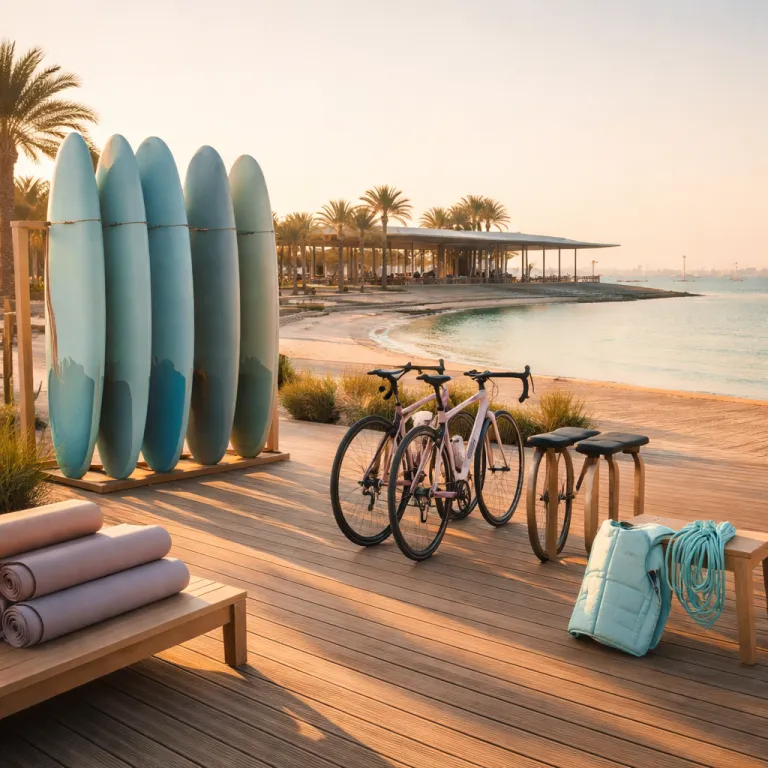
Resort UAE, redefined on Hudayriyat Island
Resort UAE once meant a predictable triangle of beach, mall, and spa. On Hudayriyat Island in Abu Dhabi, the definition of a resort break in the UAE is shifting toward movement, nature, and long horizon lines. For families who want a coastal base that balances desert calm with active energy, Hudayriyat is quietly becoming the address to watch, with cycling hubs, sports zones, and new waterfront hotels under development as part of Modon Properties’ master plan, announced by Abu Dhabi Media Office in 2020.
Hudayriyat’s master plan places cycling tracks, watersports, and shaded running routes at the heart of the island rather than as add ons. This makes it one of the few leisure districts in the country where you can move from a sunrise ride to a calm stretch of beach without ever crossing a highway or busy arterial road, according to official project maps. Parents notice the difference immediately, because children can explore between the sea, the pool, and play zones within a contained, walkable environment that feels more like a coastal park than a city block.
Abu Dhabi’s tourism strategy is clear; Saadiyat Island carries the cultural flag while Hudayriyat Island is being shaped as the active living counterpart through projects such as Hudayriyat Mar Vista and the broader Modon master plan. For premium families comparing a resort holiday in the UAE, that means Abu Dhabi can now offer a three stop arc in one stay, from Louvre Abu Dhabi to a desert retreat inland and then back to Hudayriyat’s waterfront. The result is a more layered resort experience than a single long weekend on one urban shoreline, with transfer times between Saadiyat, downtown, and Hudayriyat typically under 30 minutes by car in normal traffic, based on current navigation data.
From dunes to data: how desert wellness is evolving
Across the UAE, the desert is no longer just a backdrop for camel photos and sunset barbecues. Properties such as Desert Islands Resort & Spa by Anantara on Sir Bani Yas Island, which offers under 100 keys across rooms and villas according to the operator, show how a desert resort can combine wildlife conservation, guided nature drives, and a serious spa program. When families book a stay in the Emirates today, many are looking for that blend of desert immersion and structured wellness rather than a single infinity pool facing a highway.
In this context, Hudayriyat’s rise sits alongside established desert names like Qasr Sarab Desert Resort by Anantara in the Empty Quarter and The Ritz-Carlton Ras Al Khaimah, Al Wadi Desert. Each of these desert retreats uses the surrounding wadi desert or island landscape as the main wellness asset, with pool villas and private pools designed to frame dunes or mangroves rather than city skylines. For parents, that means children can move between guided desert activities, shaded pool time, and early evening wildlife walks without the sensory overload of a downtown hotel lobby or adjacent motorway.
Travelers who have explored the Atacama or other arid landscapes in the Middle East often recognise the same appeal in the UAE’s dunes. A detailed desert travel guide, such as a long form journey through Chile’s driest landscapes, helps explain why dry air, big skies, and silence work as natural wellness tools. When you then layer in a destination spa, structured fitness, and family friendly programming, the desert becomes a long stay destination rather than a one night excursion, with many guests now combining three to five nights in the dunes with a similar length coastal stay.
Olympia Resort Abu Dhabi: when wellness becomes the architecture
Olympia Resort Abu Dhabi on Hudayriyat Island is being positioned in master plan material as a flagship answer to what a modern UAE resort can mean when wellness is the starting point, not the afterthought. The property’s concept, as outlined in early developer announcements and project briefs, revolves around advanced recovery, including a Reboot Recovery Lounge with biohacking tools and compression technology integrated into the core guest journey. For families used to traditional spa menus, this signals a shift from passive pampering toward measurable performance and sleep quality, with data driven treatments and recovery tracking forming part of the proposed experience.
Unlike a conventional resort in Dubai where the spa and gym sit in a basement, Olympia’s design brief places movement, light, and recovery spaces along primary circulation routes. That means parents returning from a morning cycle can move directly into a compression session while children head to supervised pool activities or structured sports academies on site, as indicated in concept imagery. The architecture is doing the wellness work, guiding guests toward healthier choices without the need for constant reminders, with circulation paths that naturally pass outdoor gyms, shaded jogging loops, and quiet recovery zones.
This approach aligns with Abu Dhabi’s broader move toward active living, complementing desert stays at places like Qasr Sarab with a more urban yet still nature linked base. For travelers who already value rare finds in the desert, from shams rare sunrise views to quiet wadi desert walks, Olympia becomes the logical coastal counterpart once fully open. It is less about a single dramatic pool and more about a network of spaces that support recovery, focus, and family time across the entire day, from early morning classes to evening wind down rituals.
Comparing Hudayriyat’s active luxury with Dubai’s shoreline icons
Dubai has long defined the global image of a resort in the UAE, with Atlantis The Palm, JA Beach Hotel, and the Jumeirah beach strip setting the tone. These properties excel at spectacle, with vast pool complexes, waterparks, and beach hotel amenities that keep families entertained without ever leaving the grounds. When you book a resort in Dubai, you are buying into that high energy, high density model where everything is available, often within a single vertical hotel tower or a tightly packed beachfront cluster.
Hudayriyat Island, by contrast, spreads its energy horizontally across cycling circuits, open beaches, and low rise resort plots. The experience feels closer to a coastal desert resort than a city break, even though Abu Dhabi’s skyline sits just across the water and the Corniche is around a 15 to 20 minute drive away in typical conditions. For parents, the difference is tangible; children can move between the sea, the pool, and outdoor play without constant elevator rides or long internal corridors, and without needing frequent taxi transfers to reach green space.
There is still a place for the classic Dubai beach resort experience, especially for shorter stays or multi generational trips where grandparents value easy access to malls and medical facilities. Our contrarian guide to off season luxury in Dubai explains why quieter months can turn even the busiest Jumeirah Beach address into a calmer, better value base, with shorter queues at attractions and more competitive room rates. Yet as Abu Dhabi invests in Hudayriyat’s active lifestyle positioning, the balance of power in the UAE resort conversation is becoming more nuanced and more interesting for repeat visitors.
Designing a family stay: from private pools to desert nights
Premium families planning a resort UAE itinerary now have the ingredients for a three chapter journey that feels coherent rather than rushed. Start with a desert resort such as Qasr Sarab or The Ritz-Carlton Ras Al Khaimah, Al Wadi Desert, where private pools and pool villas sit against the wadi desert and khaimah wadi landscapes. Then shift to a beach hotel on Saadiyat or Jumeirah Beach before finishing on Hudayriyat Island, where Olympia Resort Abu Dhabi is expected to anchor the active wellness chapter once its full facilities are operational, subject to final opening timelines.
When you book this kind of trip through a curated platform, the focus should be on matching each resort and villa to your family’s rhythm. Younger children often thrive in villas or pool villas with secure private pools and shaded terraces, while teenagers may prefer larger properties with structured sports, spa access, and independent movement between the beach and the hotel gym. Parents should look for clear information on courtesy transfers, safety protocols, and whether the spa welcomes older children for specific treatments, as policies on age limits and mixed family sessions vary widely.
Our own full review process at myuaestay.com is built around how real families move through a property rather than just how a lobby photographs. We look at whether a resort in the UAE offers genuine courtesy touches, such as flexible early check in, thoughtful kids’ menus, and staff who remember names after the first day, based on direct inspection and verified guest feedback. As one of our core guidance notes puts it, “Book in advance. Check for promotions. Review amenities.”
How to read reviews and choose the right resort UAE platform
In a market as crowded as the UAE, the difference between a good stay and a great one often lies in how you handle your booking. A resort hotel can look flawless online, but only a detailed review that goes beyond star ratings will reveal whether the pool is shaded, whether villas are genuinely private, and whether the spa delivers on its promises. Families should prioritise platforms that publish a full review of each resort, including specific comments on room layouts, noise levels, and staff courtesy, ideally supported by dated inspection notes.
Names such as The Ritz-Carlton, Ras Al Khaimah properties, and major Jumeirah addresses carry weight, yet even these hotels vary widely in how they handle family needs. Look for reviews that explain how a private pool or a set of private pools is supervised, how beach hotel lifeguards operate, and whether the spa offers family friendly time slots. In the Middle East, where temperatures and distances can be demanding, these operational details matter more than a single dramatic photograph or a generic five star rating.
Specialist sites like myuaestay.com focus on luxury and premium properties across the UAE, from Atlantis The Palm with 1,544 rooms according to operator data to the 235 room JA Beach Hotel and the smaller Desert Islands Resort & Spa by Anantara. This scale awareness helps us compare like with like when assessing a resort in the UAE, whether in Abu Dhabi, Dubai, or Ras Al Khaimah. For families, that means every booking decision is grounded in context, not just in marketing language, and supported by transparent information on room counts, facilities, and typical guest profiles.
FAQ
What is the largest resort in the UAE for families?
Atlantis The Palm in Dubai is currently one of the largest integrated resorts in the UAE, with 1,544 rooms and extensive family facilities including an aquapark, multiple pools, and a wide choice of dining, as reported by the operator. For families who want everything on one site, it remains a benchmark. However, it offers a very different atmosphere from quieter desert resorts or Hudayriyat’s emerging wellness focused properties.
Are there true desert resorts in the UAE suitable for children?
Yes, the UAE has several desert resorts that welcome families, including Desert Islands Resort & Spa by Anantara on Sir Bani Yas Island and Qasr Sarab Desert Resort by Anantara in the Empty Quarter. These properties combine guided nature activities, wildlife drives, and spa facilities with pools designed for both adults and children. Many families pair a desert stay with a few nights at a beach hotel to balance adventure and relaxation, using Abu Dhabi or Dubai as the main flight gateway.
Do UAE resorts generally offer family friendly activities?
Most upscale resorts in the UAE now provide structured family programming, from kids’ clubs and teen lounges to watersports and guided cultural experiences. Properties in Abu Dhabi and Dubai often add educational elements, such as marine life encounters or conservation talks, especially at desert and island resorts. When you book, always check the age ranges and opening hours of these facilities to ensure they match your children’s needs and your planned daily schedule.
How far in advance should I book a resort in the UAE?
For peak travel periods and school holidays, it is wise to book several months ahead, especially if you want specific villas or connecting rooms. Desert resorts and pool villas with private pools are limited in number and often sell out first. Following the simple rule “Book in advance. Check for promotions. Review amenities.” helps secure better rates and more suitable room types, particularly for larger families or multi room bookings.
Is Abu Dhabi or Dubai better for an active family holiday?
Dubai offers dense, high energy resorts with immediate access to malls, theme parks, and Jumeirah Beach, which suits shorter, activity packed stays. Abu Dhabi, particularly with Hudayriyat Island and Saadiyat Island, leans toward a more spacious, culture plus wellness model that works well for longer trips. Many families now split their time between both emirates to experience the full spectrum of resort UAE options, using private transfers or intercity taxis for the roughly 60 to 90 minute journey between the two city centres, depending on traffic.