Where biometric check in quietly reshapes the luxury arrival ritual
Step off a late flight into Dubai and the first smart signal is silence. The usual front desk queue has thinned because biometric check in now links directly with immigration systems across hundreds of hotels. For a business guest extending into leisure, that calm lobby sets the tone for the entire stay.
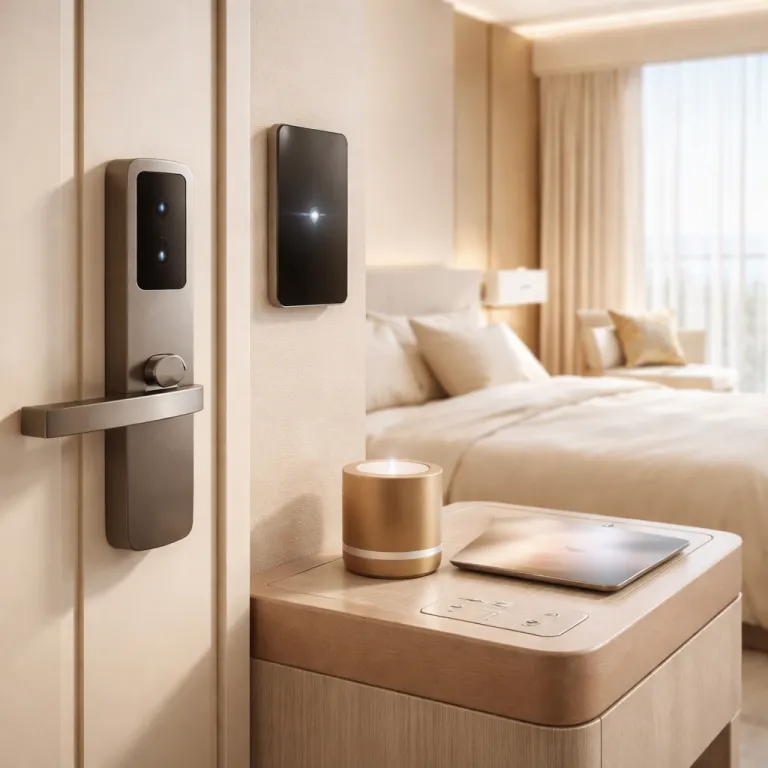
The Dubai Department of Economy and Tourism has rolled out a citywide framework where a guest registers identification and biometric data before arrival through secure mobile apps. DET statements in 2023 and 2024 describe a phased programme, with an initial pilot across selected properties and a roadmap to cover major districts and categories of hotels. At participating smart hotels, facial recognition then grants hotel room access, turning the door itself into a discreet piece of smart technology rather than a gimmick. This is where operational efficiency stops being a back of house metric and becomes something you feel in the first five minutes.
Across leading properties, the check in ritual has shifted from paperwork to preference setting inside each smart room. Instead of signing forms, guests confirm consent for how their personal data will be used to personalise lighting, temperature and room service patterns. One front office manager at a Dubai Marina property describes it as “moving the conversation from signatures to comfort settings.” For frequent travellers using a luxury booking platform such as myuaestay.com in a clearly disclosed sponsored partnership context, this means hotel rooms in Dubai, Abu Dhabi or Ras Al Khaimah can recognise a returning guest and pre set the room technology profile before they even reach the floor.
Inside the smart room: when the technology finally disappears
The most sophisticated smart hotel in the UAE rarely advertises its systems on the wall. You notice the quiet instead, as the air conditioning in your hotel room modulates to match your preferred 22 °C without a visible thermostat. Smart technologies work in the background, using Internet of Things (IoT) sensors to read occupancy and adjust energy use in real time.
At Address Hotels and Resorts, the AI concierge Nuha sits at the centre of this invisible web of devices and services. In brand statements and launch materials, Address describes Nuha as a multilingual assistant that can manage stays end to end and respond in Arabic, English and other key languages. Nuha lives inside mobile apps and in room interfaces, orchestrating room technologies, restaurant bookings and spa timings without forcing guests to learn a new system. When you request room service or a late check out, the hotel technology routes that demand through integrated systems that balance guest experience with operational efficiency behind the scenes.
For travellers who value wellness as much as Wi‑Fi, this new layer of smart technology aligns naturally with regenerative luxury. Properties that invest in advanced room technology often pair it with thoughtful spa and thermal journeys, similar in spirit to the curated wellbeing focus highlighted in this guide to a reimagined spa and golf resort for UAE luxury travellers on myuaestay.com, which is featured here as clearly labelled sponsored content. The point is not to flood rooms with devices, but to use IoT intelligence so that lighting, blinds and climate quietly enhance guest comfort while reducing wasted energy across entire floors.
AI concierges, voice control and the new etiquette of service
In the best smart hotel rooms, the most human service can now be voice activated. You speak naturally to adjust lights, request an espresso or schedule housekeeping, and the systems translate that into precise tasks for the hospitality team. When done well, this blend of hotel technology and human service feels less like automation and more like an attentive but unobtrusive butler.
Dubai’s hospitality industry has become a test bed for these AI driven services, with Nuha at Address properties acting as a virtual concierge that never sleeps. Public demonstrations and media coverage show Nuha handling everything from pillow preferences to meeting room suggestions. Guests can message through mobile apps, speak in room or interact via lobby kiosks, and the same AI layer pulls from guest data to suggest restaurants, meeting spaces or wellness experiences that match previous stays. This is where smart hotel ambitions move beyond gadgets and into long term guest experiences that build loyalty across brands.
For travellers who track their own wellbeing metrics, the next frontier links room technologies with broader wellness focused stays. Smart hotels in the Emirates are already studying how blue zone inspired programmes, like those explored in myuaestay.com’s feature on wellness focused luxury hotel stays in the UAE as part of a sponsored series, can sync with room technology to support sleep, circadian lighting and quiet zones. Under the UAE’s Federal Decree Law No. 45 of 2021 on the Protection of Personal Data (PDPL), the etiquette challenge is clear: hotels must enhance guest privacy while using smart technologies and IoT data only with explicit consent, clear opt out options and transparent controls aligned with local data protection regulations.
What guests actually feel versus what runs in the background
Ask frequent travellers about smart hotel rooms in the UAE and they rarely mention the servers. They talk about arriving to a room where the curtains are already closed against the desert glare and the lighting scene is set for evening, because the systems know their usual check in time. That is smart technology at its most elegant; it anticipates without announcing itself.
Behind that simplicity sits a dense mesh of IoT devices, building management systems and data analytics tuned for both comfort and energy performance. Industry benchmarks from hotel engineering teams suggest that intelligent controls can cut energy use in some areas by double digit percentages, often in the range of 15–25 percent for lighting and cooling. Sensors track occupancy in rooms and corridors, allowing hotel teams to cut cooling in unused spaces while keeping guest rooms at a stable temperature band. For a luxury booking platform curating only the top tier of hotels, these operational efficiency gains matter because they free up budget for better linens, more qualified staff and higher touch services.
Guests also feel the difference when hotel rooms are prepared using real time information from flights, transfers and loyalty profiles. If your inbound flight lands early, the hotel technology can reprioritise housekeeping schedules so that a smart room is ready before you reach the lobby. One guest at a Downtown Dubai property described it as “the first time my room was ready before I even thought to ask.” When this orchestration works, the guest experience feels almost frictionless, even though dozens of systems and services are working in parallel to enhance guest comfort without adding visible complexity.
Choosing the right smart hotel room through a UAE booking lens
For executives booking through myuaestay.com, the question is no longer whether a hotel is smart. The real question is how that smart hotel uses technology to serve your specific travel pattern, from back to back meetings in DIFC to a quiet weekend on Saadiyat Island. A curated platform can filter hotel rooms not just by view or suite size, but by the depth and maturity of their room technology stack.
Some smart hotels prioritise biometric check in and keyless access, ideal for travellers who value speed above all. Others invest more heavily in in room control, with voice activated scenes, tablet based interfaces and mobile apps that manage everything from spa bookings to room service timing. The most advanced properties now blend both, using smart technologies and Internet of Things infrastructure to create a consistent guest experience across towers, brands and even cities.
For travellers who care about impact as much as indulgence, the smartest choice often aligns with regenerative travel principles. Hotels that use data driven room technologies to cut unnecessary energy use and water waste are the same ones likely to invest in local sourcing, thoughtful design and long term community partnerships, themes explored in depth in myuaestay.com’s guide to regenerative travel in the Emirates, which is presented as clearly signposted sponsored editorial. When you select a smart room through a specialist UAE booking site, you are not just choosing devices; you are choosing a philosophy of hospitality where technology serves both the guest and the place.
FAQ
How does biometric hotel check in work in UAE properties ?
In Dubai and across much of the UAE, biometric hotel check in typically starts before you travel. Guests upload identification and biometric data through secure mobile apps, which are then linked to immigration records under a framework led by the Dubai Department of Economy and Tourism. Official guidance emphasises encrypted transmission, secure storage and verification against government databases. On arrival, facial recognition at kiosks or access points verifies the guest and can grant room access without a traditional key card.
What is Nuha and how does it change the guest experience ?
Nuha is an AI powered virtual concierge introduced by Address Hotels and Resorts to support guests throughout their stay. It operates across in room interfaces, lobby kiosks and mobile apps, handling requests for room service, housekeeping, restaurant bookings and local recommendations. Address has highlighted Nuha’s ability to learn from previous interactions and respond in multiple languages, and this adaptive layer helps enhance guest experiences while allowing staff to focus on higher value, face to face hospitality.
Are smart hotel rooms in the UAE safe for my personal data ?
Leading UAE hotels treat guest data protection as a core part of their smart technology strategy. Biometric information and preference profiles are stored in encrypted systems, with access restricted to authorised hospitality teams and vetted technology partners. Properties increasingly align with UAE data protection laws such as the PDPL and international best practice, offering dashboards where guests can opt out of certain features, request deletion or adjust privacy settings, and reputable hotels explain clearly how their systems use data to personalise services and how long information is retained.
What are the real benefits of smart hotel rooms for business travellers ?
For business travellers, the main advantages of smart hotel rooms are time savings and predictability. Biometric check in and keyless access reduce waiting at reception, while integrated room technologies ensure that lighting, temperature and connectivity match personal preferences on every stay. These efficiencies free up more time for meetings, rest or leisure, especially when combined with AI concierges that handle routine requests quickly and keep a clear record of past preferences.
Do I need to use mobile apps to enjoy smart room features ?
Many UAE hotels design their smart rooms so that core features work without forcing guests onto mobile apps. Basic controls for lights, climate and curtains are usually available through intuitive wall panels or voice activated systems, with apps reserved for deeper personalisation and off site control. Guests who prefer a more traditional stay can still enjoy a comfortable room, while tech forward travellers can unlock the full range of connected services and synchronise stays with their wider digital routines.