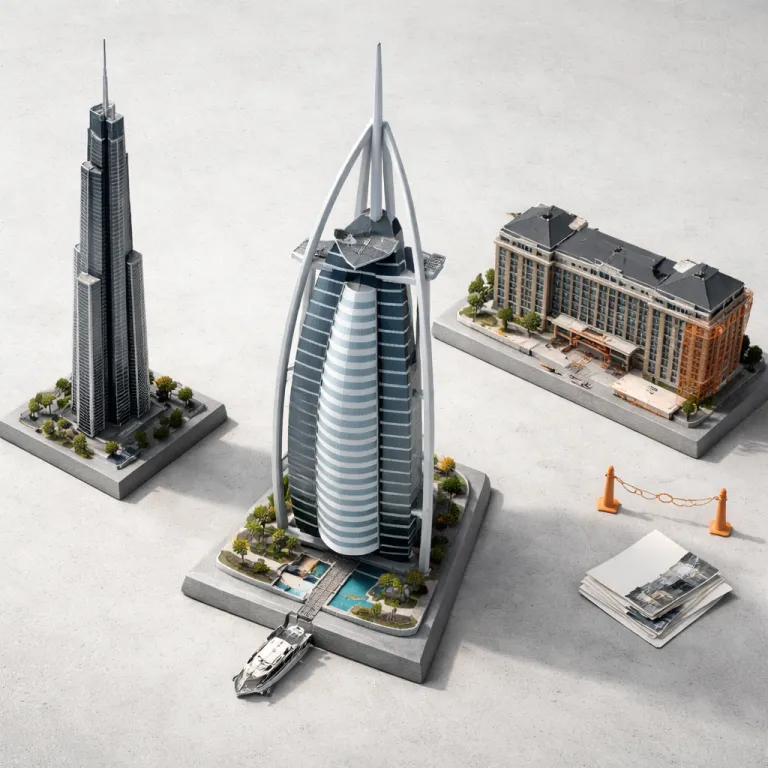
Dubai hotels closing for renovation and what this means for luxury travel
Several flagship Dubai hotels are closing for renovation at the same time, creating a rare reset in the city’s luxury landscape. The cluster of high-end properties temporarily suspending operations in an overlapping window is not accidental, as owners align with seasonal tourism patterns and shifting guest expectations in the wider Middle East. For business leisure travelers using a star hotel as both office and sanctuary, this wave of upgrades will briefly tighten top tier availability while promising a more refined guest experience later.
The most high profile project is the first major refurbishment of Burj Al Arab, a long-standing icon for Dubai tourism and global hospitality positioning. In late 2023, design trade outlet Sleeper and regional title Hotelier Middle East both reported that French designer Tristan Auer had been appointed to steer a design shift away from early 2000s opulence toward quieter luxury, a sign that the market is maturing and that Dubai will compete more on nuance than spectacle. In parallel, Armani Hotel Dubai inside Burj Khalifa and the adjacent Armani-branded residences are expected to undergo a full refurbishment; analysts at JLL’s 2024 UAE hospitality outlook and commentary from Colliers suggest a reopening target around late 2026 featuring upgraded rooms, public spaces and hotel restaurants, although official timelines remain subject to change.
These temporary closures sit against a backdrop of softer regional demand, with tourism affected by concerns around the Iran conflict and wider geopolitical risk in the Middle East. Publicly available sector commentary from STR and the Dubai Department of Economy and Tourism points to weaker occupancy in some segments, which gives owners breathing room to tackle major renovations without sacrificing peak season revenue. While precise figures vary by source, the consistent message from operators and asset managers is that “a number of Dubai hotels are closing for renovations through 2026” as part of a long-term repositioning strategy rather than a short-term retreat, with one regional consultant estimating that 4,000–6,000 keys could be cycled out of inventory at peak construction.
Key properties affected, neighbourhood gaps and where to book instead
The current wave of renovation activity is concentrated in high value districts, which matters for both corporate and leisure itineraries. In Media City, Radisson Blu Hotel, Dubai Media City has announced a closure period for extensive works, with local press indicating a shutdown from mid-2024 into 2025, and market observers noting that Radisson Blu may eventually exit the flag, leaving a gap in mid to upper upscale hospitality for media and tech executives. Nearby, travelers can pivot to a comparable Dubai hotel such as Grosvenor House or Le Méridien Mina Seyahi, while keeping an eye on how the project evolves as a real estate repositioning play.
On Dubai Palm Jumeirah, St. Regis Dubai, The Palm has scaled back operations as part of phased renovations, reducing immediate room inventory on the trunk and adjusting availability over selected dates. Industry briefings from Marriott International and coverage in Gulf Business point to works running in stages through 2025, with some suites and public areas temporarily offline. Guests loyal to that level of service can look at other hotels on Dubai Palm, including Waldorf Astoria or One&Only The Palm, while monitoring how the St. Regis Dubai, The Palm refurbishment enhances its guest experience and hotel restaurants. For a broader view of alternative premium hotels across the emirates, our curated guide to the best premium hotels in the United Arab Emirates remains a practical starting point.
Along the Creek and in Deira, Park Hyatt Dubai is entering the final phase of a multi year upgrade, with a temporary closure window that will affect golfers and marina regulars who rely on its calm setting. Hyatt’s own investor presentations and regional feasibility reports indicate that several dozen rooms and selected facilities will be out of service at any one time, even if the resort does not fully close for long stretches. Hyatt loyalists who usually split stays between Park Hyatt and city properties will need to rebalance their itineraries, perhaps combining a downtown Dubai hotel with a resort on the emerging islands coastline. Across the city, analysts estimate that several thousand rooms are being cycled through refurbishment over the next few years, which will influence average cost per night, perceived value and occupancy patterns for both independent hotels and international chains.
Design evolution, renovation economics and booking strategy for discerning guests
Behind the headlines about Dubai hotels closing for renovation in 2026 lies a deeper economic and design story that matters for high end travelers. Owners are treating each hotel as a long term asset, investing heavily in interiors, MEP systems and technology to meet new sustainability requirements and to protect future resale values in a competitive real estate market. Local policy support and tourism initiatives are helping to cushion renovation costs, encouraging major projects to proceed even as some visitor segments remain cautious and booking windows stay relatively short; as one regional asset manager put it in a 2024 panel, “this is a strategic refresh, not a retreat from Dubai.”
Design wise, the shift is away from themed maximalism toward what many call quiet luxury, with Burj Al Arab and Armani Hotel Dubai often cited as emblematic case studies. The aim is to elevate guest experience through better acoustics, more intuitive lighting, discreet technology and calmer palettes, rather than through ever taller lobbies or louder hotel restaurants. This mirrors a broader Middle East trend where a five star hotel is judged less on chandeliers and more on sleep quality, wellness programming and how seamlessly a property supports both boardroom meetings and family downtime.
For travelers planning around Dubai hotels closing for renovation in 2026 and beyond, the practical question is how to secure value while the city’s inventory is in flux. First, check each hotel’s official website or booking engine before confirming and pay close attention to partial closures, as some renovations affect only specific wings or floors while others shut the entire property. Second, consider alternative hotels not impacted by major works and look at curated resources such as our refined journey through upscale hotels in the United Arab Emirates, then layer in wellness focused stays using guides like grand wellness escapes for UAE travelers to balance city intensity with restorative time away from the skyline.